

Former members
- David García Soriano.
- César del Valle.
- Victoria López.
- Dr. Leonor de la Cueva.
- Rebeca Amaro.
- Dr. Yurena Luengo.
- Laura González.

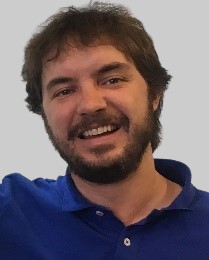
Gorka Salas obtained his PhD in Chemistry (2007, University of Valladolid) in the field of organometallic chemistry and homogeneous catalysis. During 2008-2010, he worked at the CNRS (LCC-Toulouse and LCOMS-Lyon), on the synthesis of metal nanoparticles, ionic liquids, and catalytic hydrogenations. He has been at IMDEA Nanociencia since 2011 (including a stay at the ICMM-CSIC, 2011-2013), where his research focuses on the synthesis of magnetic nanoparticles for biomedicine and other applications.

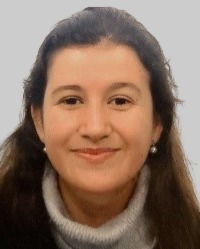
Lucía Pardinas did her bachelor in Biotechnology and Master in Advanced Therapies and Regenerative Medicine (San Pablo CEU University), with Advance Graduate Certificate in International Business Management (Boston University). Internships at the Gregorio Marañón Hospital (nanotechnology for the control of sexually transmitted viruses) and at IDIPAZ (project for the development of a biomimetic corneal stroma through 3D printing). She is currently a PhD student in the Magnetic Nanoparticles group, at IMDEA Nanociencia, carrying out research in the field of hybrid nanoparticles for biomedical applications.

Mónica Dhanjani graduated in Chemistry from the Complutense University of Madrid in 2016. During her Master’s degree in Supramolecular Chemistry (Universidad de Salamanca), she did an internship at CICbioMAGUNE (Guipuzkuoa), in the Bionanoplasmonic Group. Since 2019 she has worked in the Magnetic Nanoparticles group at IMDEA Nanociencia, where her research focuses on the synthesis of magnetic nanoparticles for biomedical applications.